
Bus Craze - Traffic Jam Puzzle
Unico StudioPuzzle
4.64.91K Reviews
- Version
- 2.8
- Installs
- 5.00M
- Age Rating
- Everyone
Screenshots
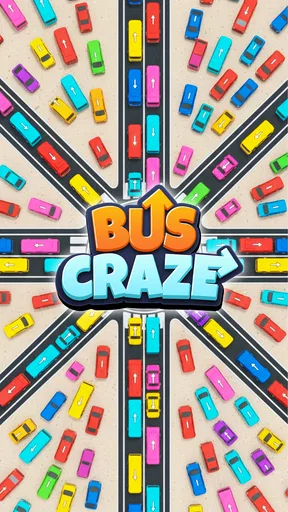
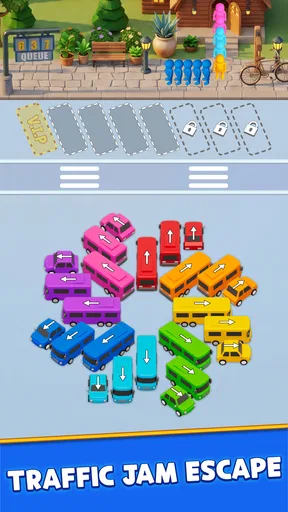
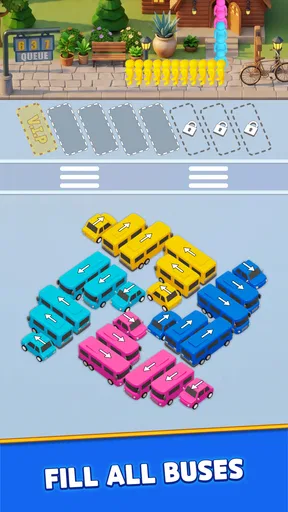
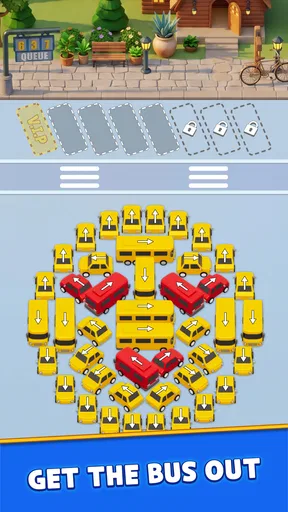
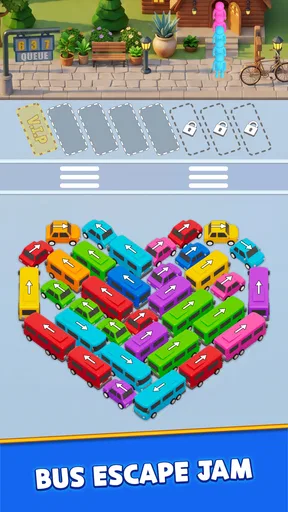
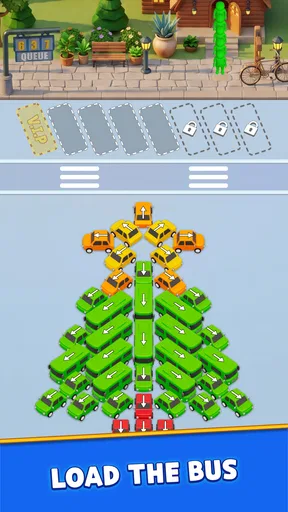
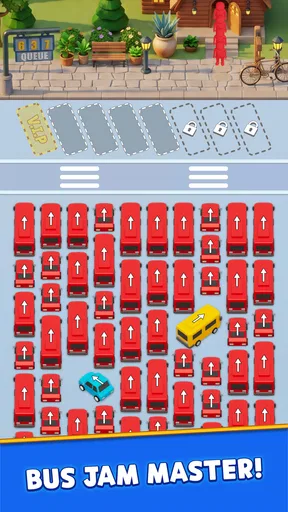
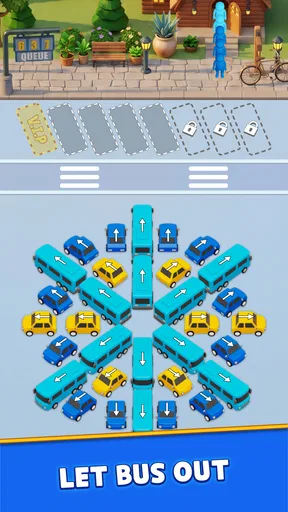
Our Review of Bus Craze - Traffic Jam Puzzle
 Analysis by Appyee
I spent my first sessions with Bus Craze expecting a light traffic puzzle and found a game that is much more deliberate than its bright presentation suggests. The basic idea is easy to understand: deal with crowded bus situations, untangle the movement, and work toward a clean solution. What makes it appealing is the small burst of satisfaction that comes from spotting the right order after a board initially looks impossible.
That immediate clarity is a real strength. I did not need a long tutorial or complicated rules before I could start making decisions. Bus Craze is a free puzzle game from Unico Studio, aimed at Everyone, and it works well as a quick mental break on Android devices running version 7.0 or later. It is also the kind of game that can look casual while still asking for patience once the arrangements become less obvious.
Why the first week feels so inviting
The opening appeal comes from the contrast between simple actions and increasingly awkward traffic patterns. I could understand what I wanted to achieve almost immediately, but reaching that goal often required me to stop treating each move as an isolated choice. A bus that seems ready to move may actually be blocking the sequence I need later, so the puzzle encourages me to look several steps ahead rather than simply react to the most visible opening.
That makes it a good fit for short sessions. I can play while waiting for an appointment, during a commute, or when I want something more engaging than scrolling but less demanding than a full action game. A typical everyday session might be five or ten minutes: solve a few boards, pause when one becomes stubborn, and return later with a clearer view. The game does not require me to remember a large story or manage a complicated character build before I can enjoy it.
The first-week rhythm is helped by the game’s approachable puzzle identity. It is not asking me to learn a large control scheme. Instead, the challenge comes from reading the arrangement, predicting consequences, and resisting the temptation to make a move just because it is available. That simplicity is useful for younger players and for adults who prefer visual problem-solving to reflex-based play.
I also like that the traffic theme gives the puzzles a recognizable context. Many mobile puzzle games use abstract tiles, jewels, or colored shapes, which can make one title blur into another. Here, the bus setting gives the decisions a little more personality. Even when the underlying task is about ordering movement, the theme helps the board feel like a small situation to resolve rather than a completely anonymous grid.
During the first few days, the strongest habit is experimentation. I often make a move to test what it changes, then restart mentally or adjust my plan when the result is not useful. That trial-and-correction process is enjoyable when the board teaches me something. It becomes less satisfying when I feel that the solution depends on guessing rather than recognizing a logical pattern, so the quality of individual puzzles matters more here than flashy presentation.
How I approach difficult boards
My most useful technique is to identify the bus or route that has the fewest realistic options before touching anything. Moving the easiest piece first can feel productive, but it may remove the space needed for a more restricted one. I now scan for bottlenecks, note which vehicles appear to depend on another opening, and only then begin. This small change makes the game feel more like planning and less like random tapping.
A second useful habit is to treat failed attempts as information. If a move creates a dead end, I ask which earlier decision caused it instead of immediately repeating the same sequence. That approach is especially helpful in a short session because it turns frustration into a quick puzzle review. I would not call this an advanced mode or hidden system; it is simply the best way I found to get more value from the game’s logic.
Players who enjoy traditional logic puzzles may appreciate that process. Players who mainly want instant rewards may find it slower than expected. The game’s appeal depends on whether you enjoy pausing to reason. If you prefer a puzzle that can be solved through rapid matching or constant visual stimulation, the bus-jam format may feel restrained.
What remains useful after the novelty fades
The more important question is whether Bus Craze can become a regular game rather than a one-week curiosity. In my experience, its recurring value comes from the low commitment. I do not need to reserve a long evening for it, and I can stop after a single puzzle without feeling that I have abandoned a larger session. That makes it easier to keep installed than games that demand daily attention or lengthy progression runs.
Its audience is also broad. Someone who wants a calm logic challenge can use it as a screen break, while a family can pass the device around and compare approaches to a tricky arrangement. Because the age rating is Everyone, it is positioned as an accessible choice rather than a game built around mature themes. I would still expect younger players to benefit from occasional guidance when a puzzle requires planning several moves ahead, but the basic concept is easy to explain.
The game’s popularity suggests that it has found a substantial audience: it carries a 4.6 average from around 376 thousand ratings and has passed 5 million installs. Those figures do not guarantee that every puzzle will suit every player, but they do indicate that the central idea has broad appeal. I can understand why: the theme is immediately readable, the sessions are compact, and the challenge is based on decisions rather than fast reactions.
For month-to-month use, I would judge it by variety and pacing rather than by the first entertaining hour. A puzzle game needs to keep presenting situations that make me rethink my usual method. If I can solve everything by applying one repeated order, the interest drops quickly. Bus Craze works best when it makes me reconsider which vehicle should move first and when it gives me a reason to slow down instead of relying on habit.
There is also value in using it as a mental reset. I sometimes choose it after working because the task is focused but contained. Unlike an endless social feed, it gives me a clear objective and a definite stopping point. Unlike a competitive game, it does not require me to match another player’s schedule or performance. That makes it a practical choice for people who want a small amount of structured entertainment.
Where the free model affects the experience
Bus Craze is free to download and play, with in-app purchases ranging from $1.99 to $59.99 per item. For me, that makes the first step easy, but it also changes how I judge the long-term experience. I want to know whether the free portion feels comfortable without pushing me toward spending whenever a puzzle becomes difficult. Anyone considering a purchase should think of it as optional convenience rather than an automatic requirement.
The presence of purchases is not a reason to dismiss the game, but it is a reason to set a personal boundary before playing. I prefer deciding in advance whether I am willing to pay for extras, because puzzle games can make a small moment of impatience feel like a good reason to spend. If you are looking for a completely purchase-free experience, this is not the safest category match. If you are comfortable trying the free version first and judging the balance yourself, the entry cost is straightforward.
Another practical point is that the current version is 2.8. That tells me the game has moved beyond its earliest release stage, but it does not by itself promise a particular update schedule or a specific amount of new content. For long-term value, I would focus on how much I enjoy solving the puzzles already available rather than installing it solely in expectation of future additions.
The maintenance burden of keeping it installed
Bus Craze has a relatively light maintenance burden compared with games that ask me to check in constantly. I can leave it alone for several days and return without needing to rebuild a routine, catch up on timed events, or remember a complicated collection of systems. That is one of its best qualities as a background game: it can fit around my schedule instead of dictating it.
At the same time, a puzzle game still asks for a certain kind of maintenance from the player. I need to protect the experience from turning into repetitive tapping. The best way I found is to stop when I am no longer thinking clearly. If I continue playing only to clear one more board, I start making careless moves and the game feels more frustrating than it really is. A short break often restores the sense of discovery.
I also recommend using it in different session lengths. A very short visit is good for clearing an easy board or testing a new approach. A longer session is better when I want to compare several possible sequences on a difficult layout. Treating every visit as a race makes the game feel more demanding, while treating it as a quiet logic exercise keeps its strengths visible.
For parents or shared-device households, the low learning barrier is convenient. I can explain the objective without handing over a long set of instructions, and another person can understand the board by looking at it. The trade-off is that players with very different patience levels may enjoy it differently. One person may want to reason through every option, while another may become bored before the solution appears.
Small habits that improve the experience
I get better results when I avoid moving a vehicle simply because it is the only obvious action. Instead, I first ask what space that move opens, which bus benefits from it, and whether the resulting position creates a new blockage. This three-question check is simple, but it prevents many of the mistakes that made early sessions feel more random.
When I am stuck, I change my viewpoint rather than tapping faster. I look at the board as a chain of dependencies: which piece must move before another, which opening is temporary, and which route becomes useless if I commit too early. That method is particularly valuable for players who want a logic workout rather than a game of trial and error.
I also find that Bus Craze works better as a deliberate break than as background noise. It needs enough attention for the puzzle relationships to matter. Playing while watching a show may be possible during easy stages, but it weakens the main appeal once the arrangements require planning. If multitasking is your priority, a simpler matching game may be a better choice.
What may cause fatigue over time
The main risk is repetition. The bus-jam premise is clear and pleasant, but clarity can become predictability if the layouts stop surprising me. I am more forgiving of a difficult puzzle when I understand why it is difficult. I am less patient when the challenge feels like repeating a familiar arrangement with only minor changes.
Another source of fatigue is the emotional swing between a clean solution and a blocked attempt. A successful sequence feels satisfying because every move supports the next one. A poor sequence can make the board look worse very quickly. That contrast is part of the design’s tension, but players who dislike restarting or reconsidering earlier choices may find it tiring rather than rewarding.
The game is also not the right choice for someone seeking a deep narrative, character development, or a broad strategic system. Its focus is the puzzle itself. I would choose a story-driven adventure for emotional progression, a competitive title for social pressure, or a richer strategy game for long-term planning across multiple systems. Bus Craze earns its place through accessibility and short-form reasoning, not through a large world.
Players who need constant novelty should approach it cautiously. The first week can feel especially fresh because the theme and basic challenge are easy to pick up. After that, the question becomes whether arranging traffic remains satisfying on its own. For me, it does when I play in moderation and pay attention to the logic. It does not when I treat it as an endless grind for the sake of completion.
The purchase structure can add to that fatigue if I feel pressured to solve a board quickly or use a convenience option instead of thinking it through. My advice is to let difficult puzzles sit. Returning later is often more satisfying than turning every obstacle into a spending decision. That approach also helps reveal whether the underlying game is enjoyable enough without relying on paid assistance.
My long-term verdict
After the initial novelty fades, Bus Craze remains worthwhile for a specific kind of player: someone who likes compact logic challenges, prefers planning to reflexes, and wants a game that can be opened without a major time commitment. Its bus theme makes the puzzles more memorable than a completely abstract presentation, while its simple premise keeps the barrier to entry low.
I would recommend trying it if you want a free puzzle game for waiting rooms, short breaks, or quiet evening sessions. I would also recommend approaching it with realistic expectations. It is not a substitute for a deep strategy game, a narrative adventure, or a highly social mobile experience. Its lasting value depends on your tolerance for repeated traffic arrangements and your willingness to solve carefully rather than rush.
Unico Studio has built a focused experience rather than an overloaded one. That focus is both the reason to install it and the reason some players will eventually move on. I like that I can return after a gap without feeling lost, and I appreciate the way a well-planned sequence turns a crowded board into an orderly result. The limitation is that the same core loop must continue carrying the experience.
My recommendation is to keep Bus Craze installed if you enjoy thoughtful five-minute puzzles and can play without feeling pushed to spend. It earns recurring space as a calm, accessible brain teaser, especially for people who want clear goals and no complicated setup. If you need constant new mechanics or a stronger sense of progression, choose another puzzle style. For everyone else, this is a pleasant game to revisit when a small traffic jam is exactly the kind of problem you feel like solving.
Verdict
Strengths of Bus Craze - Traffic Jam Puzzle
- Simple tap controls make the game easy to learn immediately.
- Short levels are convenient for quick play sessions.
- Colorful visuals make buses and passengers easy to distinguish.
- Increasing traffic complexity keeps later puzzles engaging.
- Playable offline, making it useful during travel or without data.
Limitations of Bus Craze - Traffic Jam Puzzle
- Some levels may depend more on trial and error than planning.
- Repeated bus and passenger animations can become monotonous.
- Difficulty progression may feel uneven between adjacent stages.
- Optional rewards and bonuses can encourage frequent ad viewing.
- Limited gameplay variety may reduce long-term appeal for some players.
Other Releases by Unico Studio
View All
Brain Test 2: Tricky Stories
Trivia4.7

Brain Test: Tricky Puzzles
Trivia4.7

Who is? Brain Teaser & Riddles
Trivia4.7

Brain Test 3: Tricky Quests
Trivia4.7
Similar Picks in This Category
View All
Block Blast!
HungryStudio4.8

Braindom: Brain Games Test
Lahana Game Studio4.6

AMAZE!
CrazyLabs LTD4.6

Sudoku - Classic Sudoku Puzzle
Oakever Games4.7

Art Puzzle - Puzzle Games
Easybrain4.8

Amaze GO!
Oakever Games4.9
Frequently Asked Questions
What is Bus Craze - Traffic Jam Puzzle, and how is it played?
Bus Craze - Traffic Jam Puzzle is a casual sorting and traffic-management game in which you help colorful buses leave crowded parking areas while matching passengers and clearing blocked routes. Each level requires careful planning, because moving one vehicle can create or remove space for others. The controls are generally simple, with tap-based interactions designed for short, relaxing play sessions.
Is Bus Craze - Traffic Jam Puzzle free to download and play?
The game can typically be downloaded for free, but it may include optional in-app purchases. These purchases can provide coins, boosters, extra moves, or other advantages, depending on the level and current version. Players should also expect advertising in some parts of the experience. You can usually play without spending money, although progress may feel slower when difficult puzzles require additional help.
Does Bus Craze - Traffic Jam Puzzle work without an internet connection?
Many of the basic puzzle levels can often be played offline after the game has been installed, which makes it suitable for commuting or areas with limited connectivity. However, internet access may still be required for advertisements, cloud saving, special events, updates, leaderboards, or in-app purchases. Offline availability can vary by device and version, so it is worth testing the game before relying on it without a connection.
Is Bus Craze - Traffic Jam Puzzle suitable for children?
The gameplay is easy to understand and does not usually require advanced reading or complicated controls, making it accessible to many younger players. Nevertheless, parents should review the age rating and store listing because the game may contain advertisements, optional purchases, or promotional content. If children use the app, enabling purchase restrictions and checking privacy settings is recommended to prevent accidental spending.
What should I know about difficulty, ads, and performance before downloading?
Bus Craze - Traffic Jam Puzzle starts with straightforward traffic puzzles, but later stages can become more challenging as the number of buses, passengers, obstacles, and possible moves increases. Ads may appear between levels or when you request rewards, while boosters can help when a puzzle becomes frustrating. Performance is generally dependent on your phone’s hardware, available storage, and whether the app is kept updated.
Play our best games!


